Clinical Biomarker Discovery
Identify novel diagnostic, prognostic, and predictive biomarkers through multi-omics data integration. Our AI-driven approach accelerates the development of precision diagnostics and monitors treatment efficacy.
Consult With Our Experts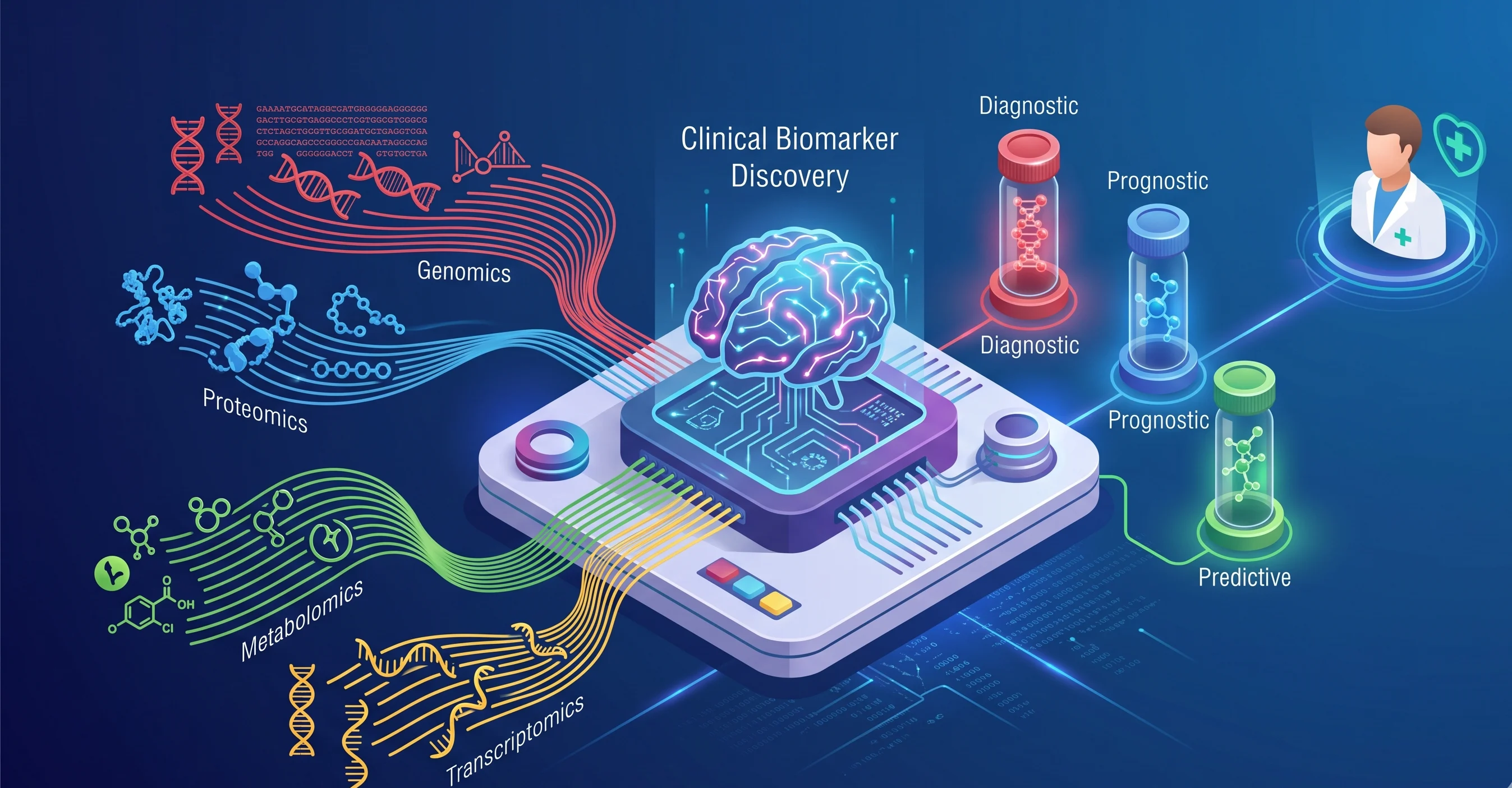
Overview
Our Clinical Biomarker Discovery service utilizes multi-omics data integration and advanced AI-driven analytics to identify novel biological indicators. We specialize in uncovering diagnostic, prognostic, and predictive biomarkers that can categorize disease states and monitor treatment efficacy with high sensitivity. By integrating genomics, transcriptomics, and proteomics data, we accelerate the development of precision diagnostics for pharmaceutical partners and clinical researchers. This approach transforms complex biological data into actionable clinical tools that improve patient stratification in clinical trials.
Key Features
> Multi-Omics Integration: Combining DNA, RNA, and protein data for a holistic view of disease biology.
> AI-Driven Analytics: Utilizing machine learning to identify complex patterns and signatures in large datasets.
> Predictive Modeling: Developing algorithms that predict how a patient will respond to a specific drug.
> Prognostic Marker Identification: Determining the likely course of a disease to guide the intensity of treatment.
> Validation Services: Transitioning discovered markers from the research phase to clinical-grade assays.
Application & Demo
Our team led a biomarker discovery project aimed at early detection of Hepatocellular Carcinoma (HCC). By analyzing the serum proteome and circulating tumor DNA (ctDNA) of at-risk patients, we identified a signature of five specific biomarkers. Our AI model demonstrated a 92% sensitivity in detecting early-stage liver cancer, significantly outperforming the standard Alpha-fetoprotein (AFP) test. This signature is now being evaluated for integration into routine clinical screening kits.
Frequently Asked Questions
How do biomarkers improve drug development?
They help identify the right patient population for a drug, increasing the success rate of clinical trials and reducing costs.
What is "Multi-Omics"?
It is a biological analysis approach where data sets from different "omes" (like the genome and proteome) are combined.
Are these biomarkers used in routine check-ups?
Some are, but many discovered through our service are used to develop new, more specialized diagnostic tests.
How does AI help in this process?
AI can process billions of data points to find correlations that are impossible for a human researcher to spot.