
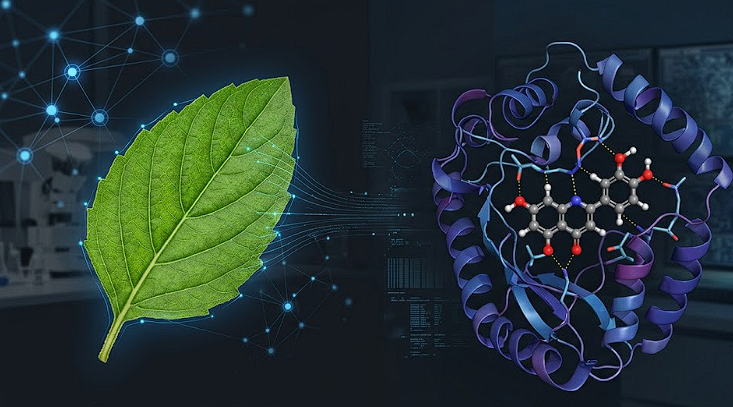
Managing Diabetic Foot Ulcers (DFUs) remains one of the most formidable challenges in modern endocrinology, often leading to severe complications including lower extremity amputations. A groundbreaking study recently published in Scientific Reports (2025), titled "In silico evaluation of Ocimum sanctum phytochemicals for diabetic foot ulcer therapy through docking, ADMET, DFT, and molecular dynamics," explores a promising natural alternative to conventional treatments.
Led by Sk. Faisal Ahmed and his research team, the study utilizes advanced computational bioinformatics to identify potent inhibitors of MMP-9—an enzyme whose elevated levels are directly linked to delayed wound healing in diabetic patients.
Targeting the MMP-9 Barrier
In chronic diabetic wounds, the over-expression of MMP-9 disrupts the delicate balance of the extracellular matrix (ECM), hindering the migration of keratinocytes and preventing effective re-epithelialization. This research systematically screened phytochemicals from Ocimum sanctum (Holy Basil) against the known inhibitor (R)-ND-336 to find more effective and safer therapeutic candidates.
Key Findings: The Power of Apigenin
Through a rigorous multi-stage in silico pipeline—including molecular docking, ADMET profiling, and Density Functional Theory (DFT)—the team identified several high-affinity compounds:
-
Top Candidates: Cianidanol, Luteolin, Rosmarinic acid, Apigenin, and Quercetin showed binding affinities ranging from -9.1 to -9.8 kcal/mol.
-
Stability & Safety: Apigenin emerged as the standout candidate. Molecular dynamics (MD) simulations confirmed its exceptional stability, robust receptor binding, and favorable drug-like properties without hepatotoxicity or neurotoxicity.
Clinical Significance
The study underscores the potential of plant-derived compounds to restore ECM homeostasis. By specifically inhibiting MMP-9, apigenin could potentially accelerate the "Design-Build-Test-Learn" cycle for new DFU treatments, offering a natural, effective path toward wound recovery and reducing the 5-year mortality risk associated with diabetic complications.
Conclusion
As bioinformatics continues to bridge the gap between traditional medicine and modern pharmacology, the discovery of apigenin’s role as an MMP-9 inhibitor marks a significant milestone. This research not only validates the therapeutic potential of Ocimum sanctum but also provides a robust computational framework for future drug development in the fight against diabetes-related morbidity.